
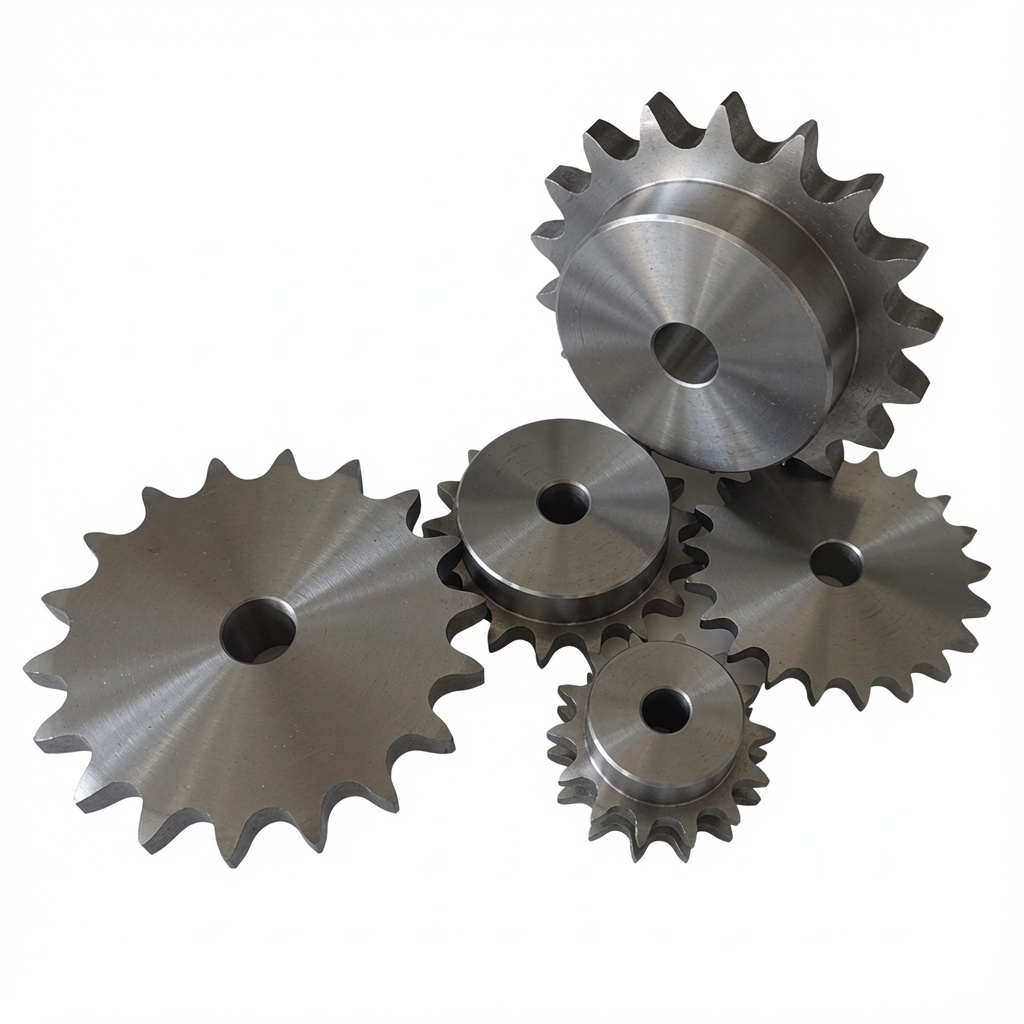
ANSI and DIN sprockets look identical in a catalogue photograph. They share the same purpose — engaging roller chain for power transmission — and at several common pitch values they even share the same physical pitch dimension. Yet they are not interchangeable, and substituting one for the other in the wrong context is one of the most reliably damaging specification errors in chain drive maintenance. This article establishes a definitive, engineering-accurate comparison of ANSI and DIN sprocket standards, explains precisely why the same pitch number does not guarantee compatibility, and provides a clear method for identifying which standard applies to any given chain drive.
The Two Standards and Their Origins
The ANSI (American National Standards Institute) sprocket standard is defined in ANSI B29.1, which specifies the tooth form, dimensional tolerances, and chain-engagement geometry for sprockets designed to run with ANSI roller chain. ANSI chain and sprockets dominate North American industrial machinery and are widely exported to markets that have adopted American engineering practice. ANSI roller chain sprockets use inch-based pitch designations: No.25 (1/4″), No.35 (3/8″), No.40 (1/2″), No.50 (5/8″), No.60 (3/4″), No.80 (1″), No.100 (1-1/4″), and so on.
The DIN (Deutsche Institut für Normung) sprocket standard is harmonised with ISO 606 and BS 228, and is defined in DIN 8187 for the B-series (European standard) and DIN 8188 for the A-series (which matches ANSI roller diameter at the same pitch). In commercial usage, “DIN sprocket” almost always refers to the DIN 8187 / ISO 606 B-series, which uses metric-based designations: 06B, 08B, 10B, 12B, 16B, and so on. These DIN stainless sprockets dominate European industrial machinery and are the standard in markets that follow German or EU engineering practice — including most of Europe, Australia, South Africa, India, and parts of Asia.
The Fundamental Compatibility Issue: Same Pitch, Different Rollers
The most dangerous misconception about ANSI and DIN sprockets is that matching pitch dimensions means the components are interchangeable. Several pitch values coincide between the two standards — for example, ANSI No.40 and DIN 08B both have a 12.7 mm (1/2″) pitch. But the roller diameter differs: ANSI No.40 uses a 7.92 mm (0.312″) roller, while DIN 08B uses an 8.51 mm (0.335″) roller. The tooth profile of each sprocket is specifically designed for its chain’s roller diameter, and the critical dimensions — seating curve radius at the tooth root and the approach arc angle — are calculated to match that roller.
When a DIN 08B roller (8.51 mm) seats in an ANSI No.40 sprocket tooth profile (designed for a 7.92 mm roller), the larger roller contacts the tooth walls at the wrong position — sitting higher in the gullet than designed, with incorrect load distribution and higher contact stress than the tooth profile can sustain. The reverse situation (ANSI No.40 roller in DIN 08B sprocket) seats too deeply, with the same mismatch in contact geometry. In both cases, the result is accelerated tooth wear and chain roller wear, vibration, and noise. In severe cases, the chain can skip teeth or jump off the sprocket entirely.
ANSI vs DIN: Chain-by-Chain Compatibility Reference
| Pitch | ANSI No. | ANSI Roller Dia. | DIN/ISO No. | DIN Roller Dia. | Same Pitch? | Interchangeable? |
|---|---|---|---|---|---|---|
| 9.525 mm | No.35 | 5.08 mm | 06B | 6.35 mm | Yes | No — different rollers |
| 12.7 mm | No.40 | 7.92 mm | 08B | 8.51 mm | Yes | No — different rollers |
| 15.875 mm | No.50 | 10.16 mm | 10B | 10.16 mm | Yes | Partial — same roller, check width |
| 19.05 mm | No.60 | 11.91 mm | 12B | 12.07 mm | Yes | No — different rollers |
| 25.4 mm | No.80 | 15.88 mm | 16B | 15.88 mm | Yes | Partial — same roller, check width |
| 31.75 mm | No.100 | 19.05 mm | 20B | 19.05 mm | Yes | Partial — same roller, check width |
| 6.35 mm | No.25 | 3.30 mm | — | — | Unique to ANSI | No DIN equivalent |
How to Identify Which Standard Your Equipment Uses
When working on existing equipment — particularly imported machinery or machinery of unknown origin — determining which sprocket standard is in use is the essential first step before ordering replacement metric chain sprockets or ANSI sprockets. The following procedure reliably identifies the chain standard.
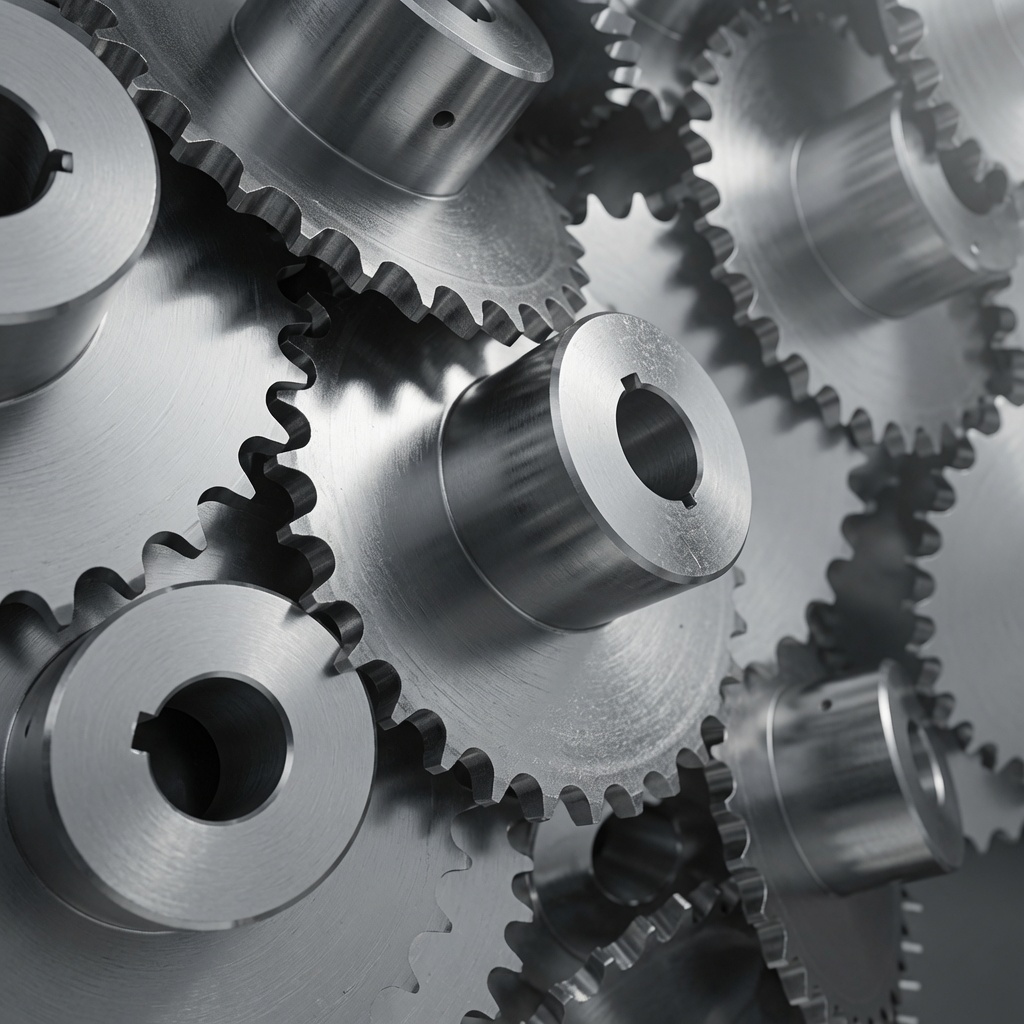
Dimensional Reference: Standard ANSI and DIN Chain Designations
| Designation | Standard | Pitch | Roller Dia. | Inner Width | Common Applications |
|---|---|---|---|---|---|
| No.25 | ANSI | 6.35 mm | 3.30 mm | 3.18 mm | Light conveyors, instrumentation |
| 06B | DIN/ISO | 9.525 mm | 6.35 mm | 5.72 mm | Light EU machinery, vending |
| No.35 | ANSI | 9.525 mm | 5.08 mm | 4.78 mm | Agricultural (US), light industrial |
| No.40 | ANSI | 12.7 mm | 7.92 mm | 7.95 mm | General industrial (US/global) |
| 08B | DIN/ISO | 12.7 mm | 8.51 mm | 7.75 mm | General industrial (EU/global) |
| No.50 | ANSI | 15.875 mm | 10.16 mm | 9.53 mm | Medium industrial (US) |
| 10B | DIN/ISO | 15.875 mm | 10.16 mm | 9.65 mm | Medium industrial (EU) |
| No.60 | ANSI | 19.05 mm | 11.91 mm | 12.70 mm | Heavy industrial, agricultural (US) |
| 12B | DIN/ISO | 19.05 mm | 12.07 mm | 11.68 mm | Heavy industrial, agricultural (EU) |
| No.80 | ANSI | 25.4 mm | 15.88 mm | 15.88 mm | Heavy main drives (US) |
| 16B | DIN/ISO | 25.4 mm | 15.88 mm | 17.02 mm | Heavy main drives (EU) |
Ordering the Correct Replacement Sprocket
The practical consequence of ANSI/DIN confusion most often appears when ordering replacement sprockets for existing machinery. A procurement team that searches for “No.40 sprocket 25T” and accepts the first match — without specifying ANSI or DIN — has a roughly 50-50 chance of receiving the wrong tooth profile if the supplier’s catalogue includes both standards. For European equipment specifically, the instinct to search for ANSI parts (which dominate North American market availability) will consistently produce the wrong sprocket. Our stainless steel sprockets are stocked in both ANSI and DIN/ISO 606 tooth profiles across the full common pitch range — always specify the chain designation (not just the pitch) when ordering, and include the standard (ANSI or ISO/DIN) explicitly.
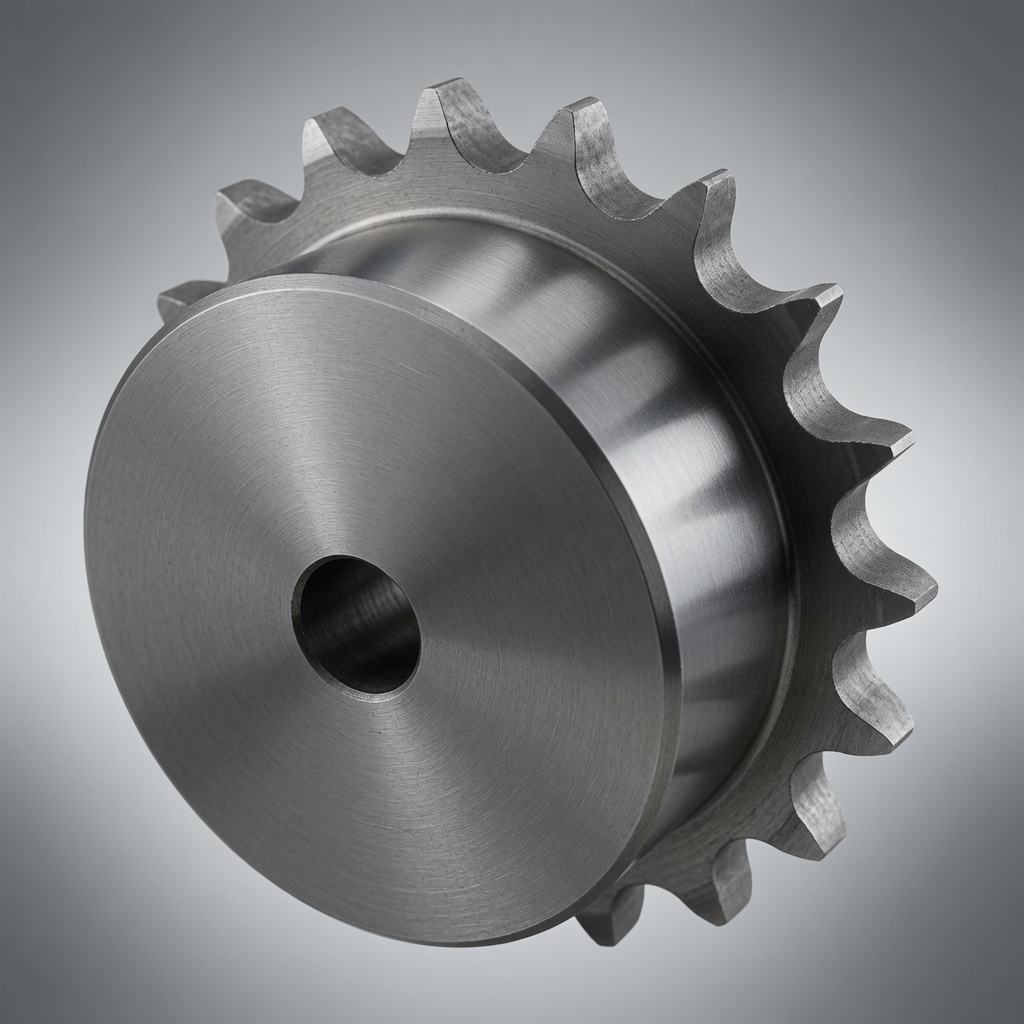
Hangzhou Ever-Power manufactures stainless steel, carbon steel, and custom chain sprockets for global industrial buyers. Low MOQ, full documentation, fast lead times from Hangzhou, China.
SHENHUA ROAD, HANGZHOU, CHINA | +86-571-88220653