
Product Description
1045Stainless Steel Motorcycle Parts Chain sprocket kit CG/TITAN/TMX/ITALIKA!
Can do as per your requirements and specifications!
Our motorcycle chain kit,made by number 45 stainless steel,with chain,small sprocket,big sprocket,or with your requirement of sprocket bolt or not,has the feature of high anti-temperature and anti-heat. Model CG,is 1 of the most popular model in many countries,since 2001s,we have worked in this model for more than 17yrs. We understand every single features of this chain set.
| Information | |
| Model for | Various models’specification |
| Material | #45 steel |
| Package | LPI package |
| Trademark | LPI |
| OEM/Not OEM | OEM available |
More motorcycle parts we can supply!
| Motorcycle parts we can supply | |
| Engine parts | Cylinder head,Cylinder kit(Piston),Valve set,Arm rocker,Chain set(big sprocket,small sprocket,chain),Bearing,Clutch assy(clutch gear,clutch plates,clutch cover),Drive plate assy(weighing rollers,ace driven),Transmission assy( transmission belt,transmission,kick shaft,shift lever),Carburetor |
| Electrical parts | Stator,Stater motor,Ignition coil,Rectifier,CDI,Lock set(lock,cap) |
| Frame parts | Brake shoes,Brake disk,Barke pump assy,Fr&Re hub,Front hub iron,Rim,Brake pads,Rubber damper,Speedometer gear,Fuel cock,Speedometer,Turning light,Headlight,Tail light,Mirror,Fr&Re absorber,Horn,Cables(speedometer cable,throttle cable,brake cable),Battery,Battery |
| Body parts | Oil tank,Side cover,Front&Rear fender,Upper handie cover,Medification front cover,Front protector cover,Down cover,Side cover cap,Lnner box fairing |
| Motorcycle accessory | Handle grips,Nuts,Glooves |
More available parts for: Motorcycle,Atv,Pocket bike,Dirtbike etc
| HONDA | CG125 CG150 CG200 GY650( 125 150) C70 C90 C100 C110 CUB90 WAVE100 WAVE110 WS110 WAVE125 CB125 CB150 SH125 SH150 TMX125 XRM125 WH125 |
| YAMAHA | 3KJ50 BWS MBK YB50 2JA JOG50 CRYPTON110 XC125 Y110 RX115 JY110 YBR125 MAJESTY250 CYGNUS X125 MIO NOUVO JUPITER-MX RXS115 |
| SUZUKI | GN125 GN150 AX100 GS125 AD50 AG50 HJ125 SMASH110 |
| KAWASAKI | BC175 KRISS BAJAJ-CT100 BAJAJ-CNG125 |
| ITALIKA | CS125, DS125, XS125/150, DS150, GS150, WS150, ST70, STRADA70, ST90, AT110, ARGENTA110, FT110/125/150, XT110, FORZA150 |
| BAJAJ | BOXER CT100, PULSAR135/150/180/200, DISCOVER125/135, PLATINO100/125 |
About TTP:
TTP POWER DEVELOPMENT(HangZhou) CO.,LTD was founded in 2001s,which is responsible for the work related to assembly factories,repair shops and after-sales services. We mainly engaged in high-quality motorcycle spare parts exportation. With outstanding brand LPI,RACING BEE,TTP exports large quantity every year to European countries,South American countries,Middle East countries and Southeast Asia countries,etc. We offer different genuine parts for different motorcycle models,motorcycle engine assembly,motorcycle engine parts,motorcycle body parts,motorcycle accessories,also parts for POCKET BIKE,ATV,SCCOTER. With very kinds of variety parts,our clients fond of making long term corporation replationship with us.
The products are in high quality,beautiful design and reasonable price,with support of innovating R&D,the company always focuses on quality of products and services for every important customer and makes it as its whole life purpose.
| Type: | Chain and Sprocket Kit |
|---|---|
| Material: | 1045 Steel |
| Certification: | ISO9001:2001, CCC |
| Surface Treatment: | Polishing |
| Sprocket Bole: | Can Do as Your Sample |
| Production: | Mass Production |
| Customization: |
Available
| Customized Request |
|---|
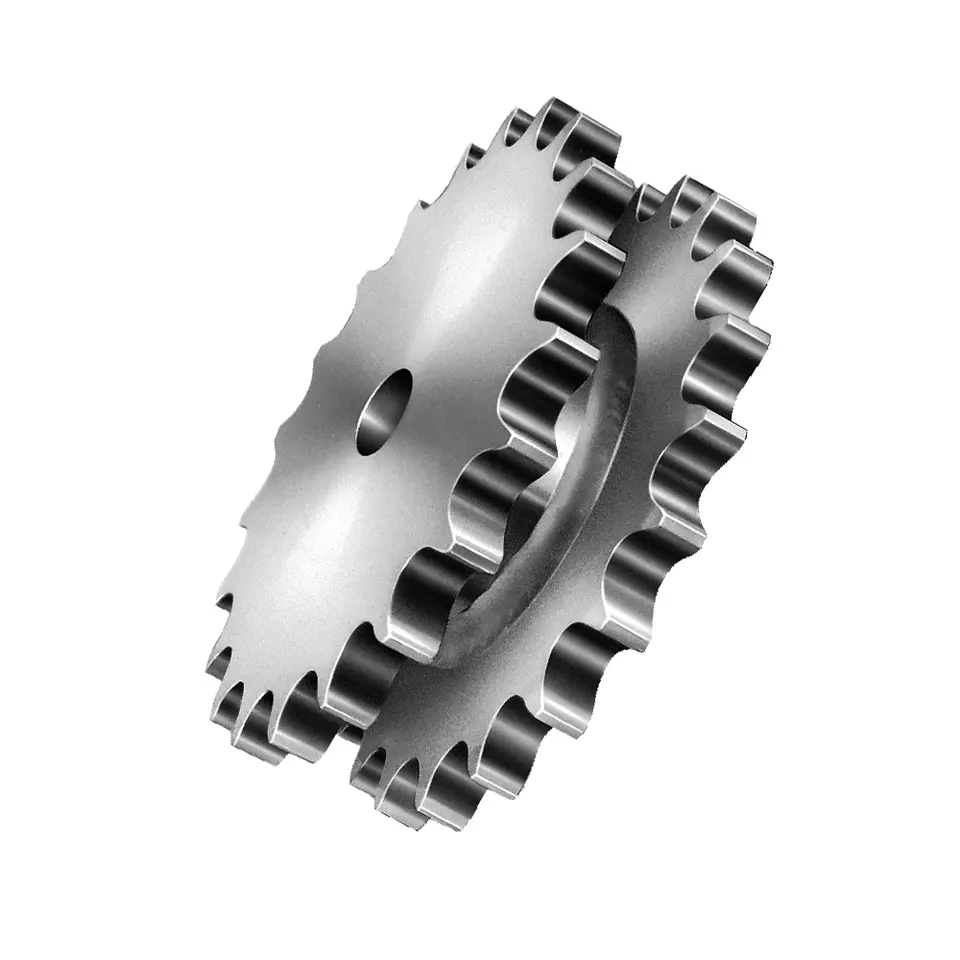
How to Identify and Troubleshoot Common Issues with Wheels and Sprockets
Identifying and troubleshooting common issues with wheels and sprockets can help you maintain their proper functioning and prevent potential problems. Here are some steps to follow:
- Abnormal Noise: If you notice unusual noise during operation, it could indicate misalignment, worn sprockets, or a loose chain. Check for any loose bolts or fasteners and ensure proper alignment of the sprockets.
- Chain Slippage: Chain slippage can occur due to insufficient tension or worn-out sprocket teeth. Check the chain tension and adjust it to the recommended level. Inspect the sprocket teeth for signs of wear and replace them if necessary.
- Uneven Wear: Uneven wear on the sprocket teeth can be a result of misalignment or a worn-out chain. Check the alignment of the sprockets and adjust as needed. If the chain is stretched or has damaged links, replace it with a new one.
- Excessive Vibration: Excessive vibration may be caused by imbalanced wheels or misaligned sprockets. Check for any bent or damaged wheels and ensure proper alignment of the sprockets.
- Chain Skipping: If the chain skips over the sprocket teeth during operation, it could be due to worn sprocket teeth or a loose chain. Inspect the sprocket teeth for signs of wear and replace them if necessary. Adjust the chain tension to the proper level.
- Chain Jamming: Chain jamming can occur if there is debris or dirt between the chain and sprockets. Clean the chain and sprockets thoroughly to remove any obstructions.
- Excessive Chain Wear: Regularly inspect the chain for signs of wear, such as elongation, damaged links, or rust. Replace the chain if it is significantly worn to avoid damage to the sprockets.
- Overheating: Overheating can be caused by high friction between the chain and sprockets or improper lubrication. Ensure proper lubrication and check for any misalignment or tight spots in the system.
By identifying these common issues and performing regular inspections, you can troubleshoot problems early on and take appropriate corrective measures, ensuring the smooth operation and longevity of the wheel sprocket assembly.
Inspecting a wheel sprocket for Wear and Tear
Regular inspection of the wheel sprocket is essential to ensure their proper functioning and to identify any signs of wear and tear. Here are the steps to inspect a wheel sprocket:
- Visual Inspection: Start by visually examining the wheel sprocket for any visible signs of wear, damage, or deformation. Look for cracks, chips, dents, or any irregularities on the surface of both components.
- Check for Misalignment: Verify that the wheel sprocket are properly aligned with each other. Misalignment can lead to accelerated wear and affect the overall performance of the system.
- Measure Wear: Use calipers or a wear gauge to measure the sprocket’s tooth profile and the wheel’s rolling surface. Compare these measurements with the original specifications to determine if significant wear has occurred.
- Inspect Teeth and Chain Engagement: If the wheel sprocket are part of a chain drive system, closely examine the sprocket teeth and chain engagement. Worn or elongated teeth can cause poor chain engagement and lead to premature failure.
- Lubrication: Check the lubrication of the wheel sprocket. Insufficient or excessive lubrication can cause increased friction, leading to wear and reduced efficiency.
- Bearing Condition: If the wheel is mounted on a shaft with bearings, inspect the bearings for any signs of wear, noise, or rough movement. Properly functioning bearings are crucial for the smooth operation of the system.
- Inspect Mounting Hardware: Ensure that all nuts, bolts, and other mounting hardware are securely tightened. Loose fasteners can cause vibration and misalignment issues.
- Check for Contaminants: Remove any debris, dirt, or foreign particles that may have accumulated on the wheel or sprocket. Contaminants can accelerate wear and damage the components.
- Replacement or Maintenance: Based on the inspection results, determine if any parts need replacement or if maintenance is required. Address any issues promptly to prevent further damage and maintain the system’s performance.
Regularly scheduled inspections and maintenance can help prolong the lifespan of the wheel sprocket assembly, optimize performance, and ensure the safety of the mechanical system.

Choosing the Right Size of Sprocket to Match a Wheel
Choosing the correct size of sprocket to match a wheel is essential for ensuring efficient power transmission and proper functionality of a mechanical system. Here are the steps to help you choose the right size of sprocket:
1. Determine the Pitch Diameter of the Wheel:
Measure the diameter of the wheel from the center to the point where the teeth of the sprocket will engage with the wheel. This measurement is known as the pitch diameter of the wheel.
2. Identify the Desired Gear Ratio:
Determine the gear ratio you want to achieve for your application. The gear ratio is the ratio of the number of teeth on the sprocket to the number of teeth on the wheel and determines the speed and torque output.
3. Calculate the Number of Teeth on the Sprocket:
Once you have the pitch diameter of the wheel and the desired gear ratio, you can calculate the number of teeth on the sprocket using the formula:
Number of Teeth on Sprocket = (Desired Gear Ratio) * (Number of Teeth on Wheel)
4. Select a Standard Sprocket Size:
Based on the calculated number of teeth on the sprocket, choose a standard sprocket size that comes closest to the calculated value. Sprockets are available in various tooth counts, and you may need to choose the nearest size available.
5. Consider Chain Compatibility:
If you are using a chain drive system, ensure that the selected sprocket is compatible with the chain you plan to use. The chain pitch (distance between the centers of adjacent roller pins) should match the pitch of the sprocket.
6. Verify Center Distance:
Check that the center distance between the wheel and the sprocket is appropriate for your application. The center distance is the distance between the centers of the wheel and the sprocket and should be set to achieve the desired tension and alignment of the chain or belt.
7. Consider the Material and Tooth Profile:
Select a sprocket material suitable for your application, such as steel, stainless steel, or plastic, based on factors like load, environment, and operating conditions. Additionally, consider the tooth profile (standard or custom) to ensure smooth engagement with the chain or belt.
By following these steps and considering the specific requirements of your machinery and mechanical system, you can choose the right size of sprocket to match your wheel and achieve optimal performance and longevity of the system.


editor by CX 2023-10-25