
Product Description
Detailed Photos
Product Description
|
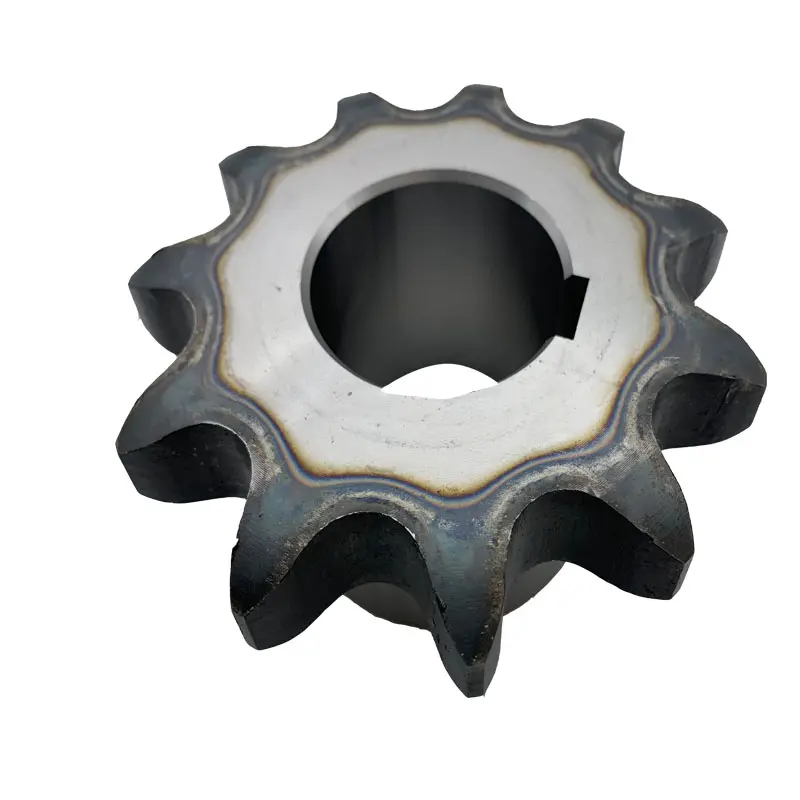
Product Name |
Sprocket/Drive Sprocket |
|
Type |
Excavator Spare Parts |
|
Model Number |
PC100-5/6 PC120 PC130 |
|
Material |
50Mn |
|
Surface Hardness |
HRC50-56 |
|
Country of CZPT |
ZheJiang China |
|
MOQ |
1pcs |
Company Profile
Xihu (West Lake) Dis. Dingrui Construction Machinery Co., Ltd. is a construction machinery parts enterprise that integrates the design and development, manufacturing and technical service of excavator parts.We specialise in the development, production and sale of excavator parts and are committed to providing our global customers with products and services of outstanding quality and consistent performance.
For the future, Dingrui will always adhere to the corporate mission of “providing excellent products and services to global customers”, abide by the core values of “integrity, enterprise, symbiosis and innovation”, continuously strengthen research and development innovation and talent team construction, continuously promote the standardization, standardization and scientific management, and commit to become a globally trusted construction machinery parts life-cycle service provider!
Packaging & Shipping
FAQ
Q1: You are a trader or a manufacture?
A1: We are a factory-based and trade integration company. Our factory is located in No. 65, Dawei Village Industrial Zone, Huanfeng Town, Xihu (West Lake) Dis. County, HangZhou City, ZheJiang Province.
Q2: How can I be sure the part will fit my excavator?
A2: Give us correct model number/machine serial number/any numbers on the parts itself. Or measure the parts and give us dimension or drawing.
Q3: How about the payment terms?
A3: We usually accept T/T, L/C ,D/A,D/P,Money Gram ,Western Union, Paypal, Alibaba trade assurance.
Q4: What is your minimum order?
A4: It depends on what products you are buying. Normally, our minimum order is 20.
Q5: What is your delivery time?
A5: Usually,15-20 days. If the parts are available in our warehouse, our delivery time will be shortened to 7-10 days.
Q6: What about your Quality Control?
A6: We have a perfect QC system for the perfect products. A team who will detect the product quality and specification piece carefully, monitor every production process until packing is complete, to ensure products safety into the container.
/* January 22, 2571 19:08:37 */!function(){function s(e,r){var a,o={};try{e&&e.split(“,”).forEach(function(e,t){e&&(a=e.match(/(.*?):(.*)$/))&&1
| After-sales Service: | Online Support |
|---|---|
| Warranty: | No |
| Type: | Sprocket |
| Application: | Excavator |
| Condition: | New |
| Video Outgoing-Inspection: | Not Available |
| Customization: |
Available
| Customized Request |
|---|
Alternatives to Chain Sprockets in wheel sprocket Configuration
While chain sprockets are commonly used in wheel sprocket configurations, there are alternative methods for power transmission in various applications:
- Gear and Gear Rack: Gears are toothed wheels that mesh with each other to transmit power. Instead of using a chain and sprocket, gears can directly engage with each other, offering a smooth and efficient power transfer. Gear racks, which are linear gears, can be used in place of wheels for linear motion applications.
- Belt and Pulley: Belts and pulleys offer a flexible and quiet means of power transmission. They work similarly to chain and sprocket systems but use belts instead of chains. Pulleys have grooves that grip the belt, allowing power to be transferred between the pulleys.
- Gear Train: A gear train consists of multiple gears meshed together to achieve specific speed and torque ratios. Gear trains are often used in complex machinery and mechanical systems where precise power transmission is required.
- Direct Drive: In some applications, direct drive mechanisms can be used, where the motor or power source is directly connected to the wheel or load without any intermediate components like sprockets or gears.
- Friction Drive: Friction drive systems use the friction between two surfaces to transfer power. One surface, such as a rubber wheel, is pressed against another surface to achieve power transmission.
The choice of alternative power transmission methods depends on various factors, including the application requirements, available space, speed, torque, and efficiency considerations. Each alternative method has its advantages and limitations, and the selection should be based on the specific needs of the mechanical system.
When considering alternatives to chain sprockets, it is essential to analyze the requirements of your application and consult with engineering experts or manufacturers to determine the most suitable method of power transmission for optimal performance and longevity.
Vertical Power Transmission with wheel sprocket System
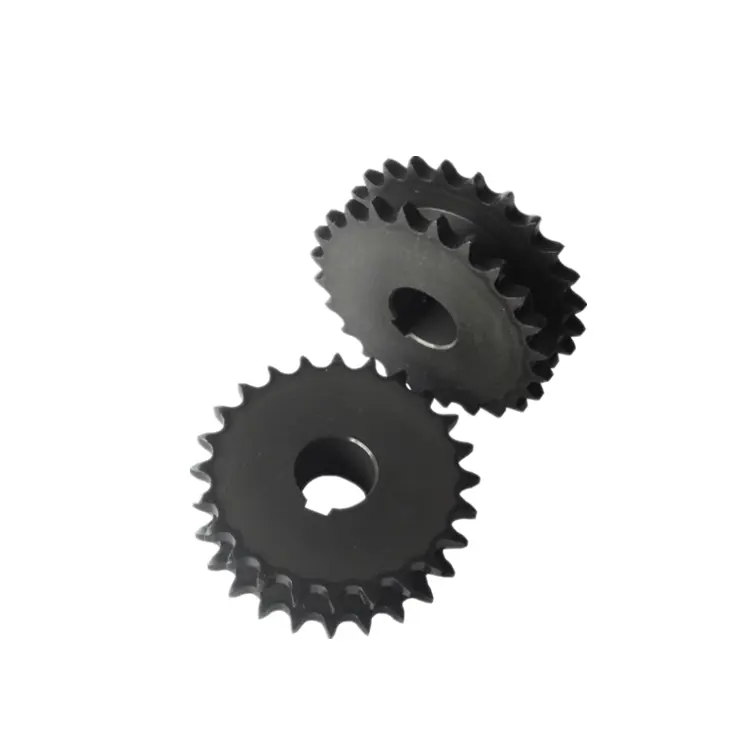
Yes, a wheel sprocket system can be used for vertical power transmission. In such cases, the system is designed to transmit power and motion between vertically aligned shafts. Vertical power transmission using a wheel sprocket assembly follows similar principles to horizontal transmission, but there are some factors to consider:
- Load and Torque: When transmitting power vertically, the weight of the load can significantly impact the torque requirements. The torque must be sufficient to lift the load against gravity while accounting for friction and other resistive forces.
- Sprocket Selection: Choosing the right sprocket is critical for vertical transmission. The sprocket teeth must be designed to engage the chain or belt effectively and prevent slipping, especially when lifting heavy loads.
- Lubrication: Proper lubrication is essential to reduce friction and wear in the system. Vertical applications may require specific lubricants to ensure smooth operation and prevent premature failure.
- Tensioning: Maintaining the correct tension in the chain or belt is crucial for vertical power transmission. Proper tension helps prevent sagging and ensures proper engagement between the wheel sprocket.
- Overhung Load: In vertical setups, the weight of the sprocket and shaft assembly can impose an overhung load on the bearings. Adequate support and bearing selection are necessary to handle this load.
Vertical power transmission with a wheel sprocket system is commonly used in various applications, including conveyor systems, elevators, and some industrial machinery. Proper design, installation, and maintenance are essential to ensure safe and efficient operation in vertical configurations.
Can a wheel sprocket System be Used in Bicycles and Other Vehicles?
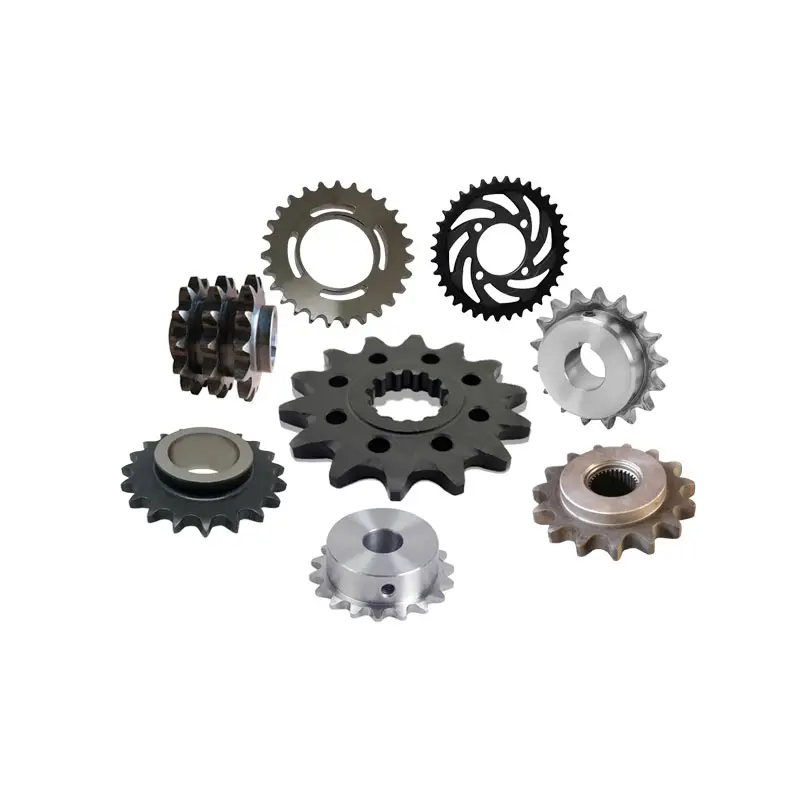
Yes, a wheel sprocket system is commonly used in bicycles and various other vehicles. In bicycles, the wheel sprocket system is a fundamental part of the drivetrain, which transfers power from the rider’s legs to the wheels, propelling the bicycle forward.
The typical bicycle drivetrain consists of a chain, front sprockets (chainrings), rear sprockets (cassette), and the bicycle’s wheels. When the rider pedals the bicycle, the chain engages with the sprockets, and as a result, the rotational motion from the pedaling is transferred to the rear wheel.
The selection of sprocket sizes (number of teeth on chainrings and cassette) can affect the gear ratio, allowing cyclists to adjust their pedaling effort and speed to suit different terrains and riding conditions. Smaller sprockets provide easier pedaling for climbing steep hills, while larger sprockets offer higher speeds on flat or downhill sections.
Beyond bicycles, the wheel sprocket system is widely used in various other vehicles and machinery to transmit power and control speed. It can be found in motorcycles, mopeds, electric scooters, and even some small electric vehicles. Additionally, the wheel sprocket system is prevalent in industrial machinery, where precise speed control and torque transmission are essential.
The efficiency and reliability of the wheel sprocket system make it a versatile and practical choice for many vehicles and mechanical applications.


editor by CX 2024-04-02